Live NFL Betting with Crypto: In-Play Markets, Latency, and UK Timing
 Available in US
Table of Contents
- Live Betting by the Numbers: 53% of All Wagering Activity
- How Live Crypto Bets Are Placed and Settled
- Blockchain Confirmation Times vs Live Odds Movement
- UK Kick-Off Times and the Live Betting Window
- NFL Live Markets: Quarter Lines, Drive Props, and Next Score
- Mobile Live Betting: 80% of Wagers from Phones
- Frequently Asked Questions

The first live bet I ever placed with crypto was a disaster of timing. Fourth quarter, Chiefs trailing by 3, I wanted to back them on the live moneyline before the two-minute warning. I initiated a Bitcoin deposit — on-chain, because Lightning was not an option at that platform in 2020 — and by the time the transaction confirmed, Mahomes had already thrown the go-ahead touchdown. My bet landed on a line that had shifted from 6/4 to 1/3. The value was gone. The game was effectively over. And I was staring at an odds screen that had moved three times while I waited for the blockchain.
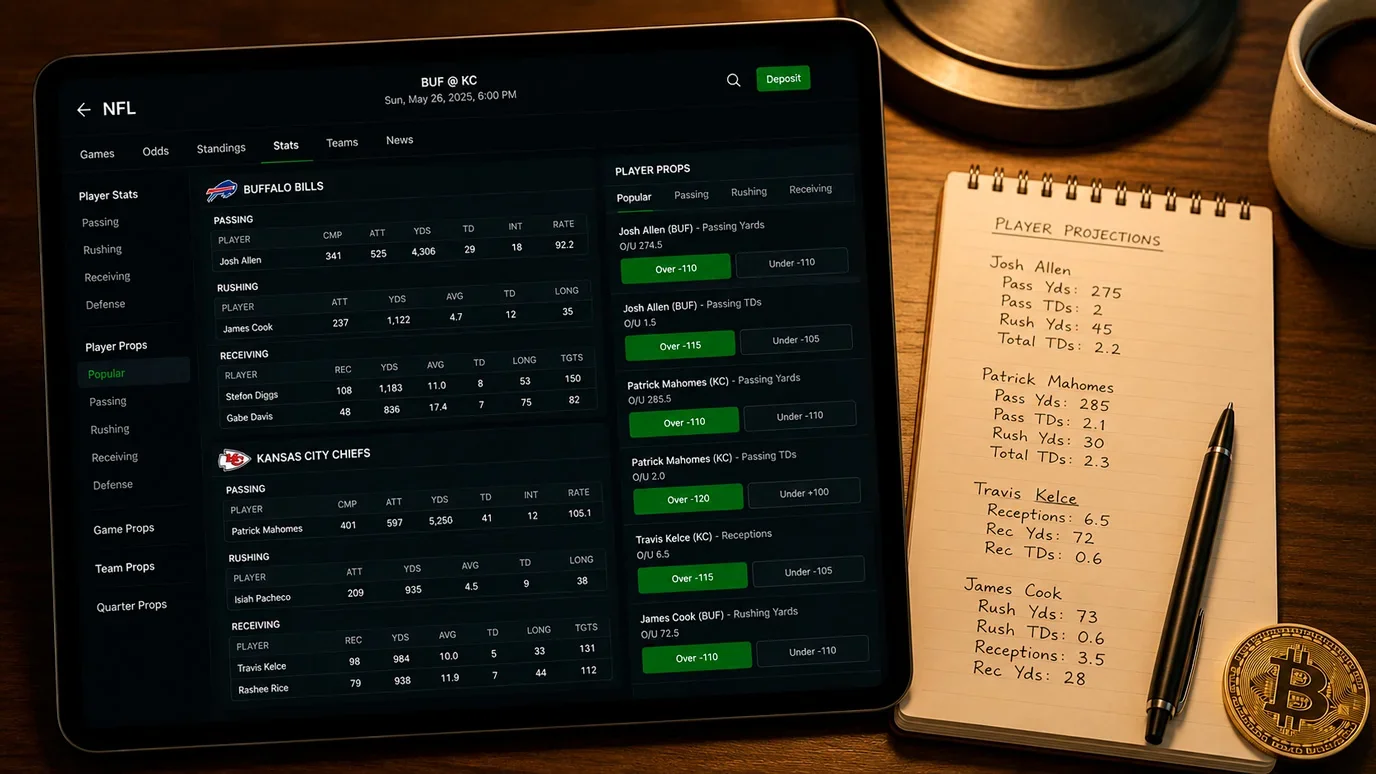
Live betting now accounts for 53.4% of all wagering activity globally, and it is the fastest-growing segment of the sports betting market. For NFL games, the in-play window is particularly active — three hours of action with natural breaks between plays, between drives, and between quarters that create constant reassessment points. Crypto sportsbooks have responded to this demand, but the intersection of blockchain mechanics and real-time odds is where the technology’s limitations become most visible. This guide covers the data, the mechanics, and the practical realities of placing live NFL bets with cryptocurrency from the UK.
Live Betting by the Numbers: 53% of All Wagering Activity
The shift to live betting has been the defining structural change in sports gambling over the past five years. A decade ago, the vast majority of bets were placed before kick-off. Today, more than half of all wagers happen after the game has started, and the trajectory is still climbing — industry projections put live betting’s compound annual growth rate at 14.85% through 2031.
For the NFL specifically, the live betting opportunity is enormous. The global online gambling market generates over 101 billion dollars in revenue, with sports betting accounting for 52% of the total. The NFL’s position within sports betting is disproportionate to its calendar — a 17-game regular season compressed into 18 weeks, followed by four weeks of playoffs and the Super Bowl. Despite that compact schedule, NFL generates more single-game wagering handle in a single Sunday slot than entire weeks of MLB or NBA action. When half of that activity is live, the in-play window for each NFL game represents concentrated demand that crypto sportsbooks are racing to serve.
What drives live betting volume in the NFL is the sport’s structure. Unlike football (soccer), where play is continuous for 45-minute halves, American football stops after every play. The ball is reset, the play clock runs, and teams have 25 to 40 seconds to snap the ball again. Each stoppage is a decision point for live bettors. Will they run or pass? Is the trailing team about to go for it on fourth down? Is the kicking team coming out for a field goal attempt? These micro-events create a rolling sequence of betting opportunities that live odds reflect in real time.
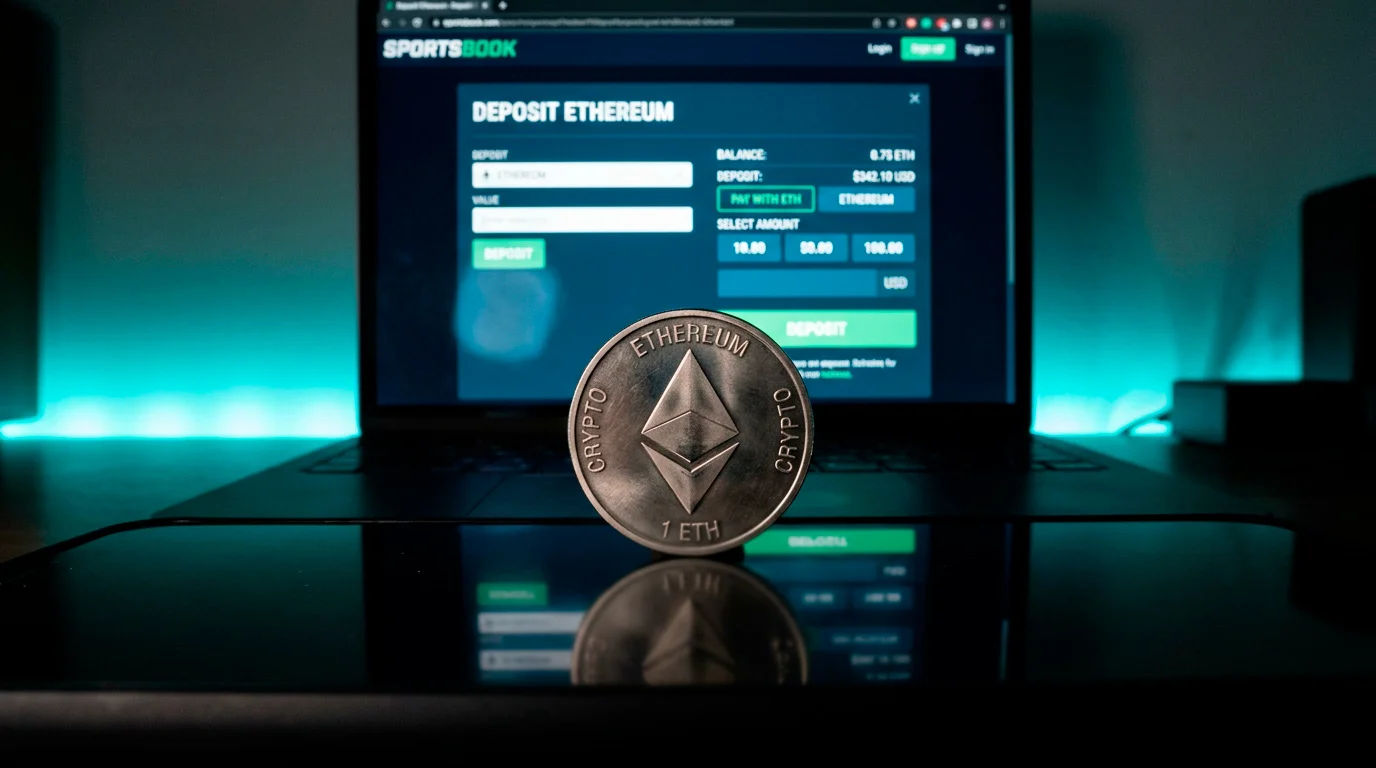
The crypto dimension adds a layer of complexity that fiat-based live betting does not face. At a traditional UK bookmaker, your pre-funded account balance is instantly available for live bets. At a crypto sportsbook, you need funds already deposited and credited — because a deposit initiated during the game may not confirm before the market you want has closed. The cardinal rule of live NFL betting with crypto is simple: deposit before kick-off. If your balance is funded, the live betting experience is functionally identical to fiat platforms. If it is not, you are a spectator.
The growth trajectory matters for understanding where the market is heading. Live betting’s share of total wagering has risen from under 30% in 2019 to 53.4% in early 2026, and the pace shows no sign of slowing. Crypto sportsbooks that invested early in live betting infrastructure — real-time odds engines, low-latency data feeds, mobile-optimised interfaces — are capturing a disproportionate share of new depositors. Platforms that treated live markets as an afterthought are falling behind. If you are choosing a crypto sportsbook primarily for NFL live betting, the quality of the in-play experience should be the first thing you evaluate, ahead of bonus offers, supported currencies, or any other feature.
How Live Crypto Bets Are Placed and Settled
There is a common misconception that live crypto bets involve sending a blockchain transaction for each wager. They do not — and if they did, live betting with crypto would be impossible.
Here is how it actually works at the vast majority of crypto sportsbooks. You deposit cryptocurrency before the game starts. That deposit is credited to your account balance on the platform’s internal ledger — a database entry, not a blockchain state. When you place a live bet during the game, the sportsbook deducts the stake from your internal balance and records the bet on their system. No blockchain transaction occurs at the moment of the bet. The entire in-play wagering experience happens off-chain, on the sportsbook’s servers, with the same speed and responsiveness as a fiat-based platform.
Settlement follows the same internal logic. When your live bet resolves — the quarter ends, the drive results in a score, the player passes the yardage threshold — the sportsbook credits your internal balance with the payout. The blockchain only becomes involved again when you withdraw funds to your personal wallet. This architecture means that live betting speed at custodial crypto sportsbooks is determined by the platform’s software, not by blockchain confirmation times.
Decentralised sportsbooks are the exception. Platforms that operate entirely on-chain — where bets are recorded as smart contract interactions — face real latency constraints for live markets. Each bet requires a blockchain transaction, which means gas fees (on Ethereum) or network confirmation times (on other chains) create a delay between clicking “place bet” and the wager being confirmed on-chain. Most decentralised platforms acknowledge this limitation and either restrict their live market offerings or use hybrid architectures where bets are placed off-chain and settled on-chain after the game concludes. The mobile UX for on-chain live betting remains particularly clunky compared to custodial alternatives, adding friction that makes real-time wagering impractical on fully decentralised platforms.
Blockchain Confirmation Times vs Live Odds Movement
I timed it once. During a Thursday Night Football game, the live spread on a crypto sportsbook shifted six times in the 14 minutes it took an on-chain Bitcoin deposit to confirm. Each shift was between 0.5 and 2 points — significant enough to change the value proposition of the bet entirely. If I had been waiting on that deposit to fund a live wager, I would have been chasing a line that no longer existed by the time my money was available.
This latency problem is specific to the deposit phase, not the betting phase. As I explained in the previous section, once your funds are credited to a custodial sportsbook’s internal ledger, live bets execute instantly. The issue arises only when a bettor has not pre-funded their account and tries to deposit during a live game. On-chain Bitcoin takes 10 to 60 minutes for confirmation. Ethereum takes 12 to 30 seconds per block but requires multiple confirmations at most platforms. Lightning Network transactions are near-instant but not universally supported.
The broader context is that NFL live odds move on a different timescale than blockchain confirmations. A single play — an interception, a 60-yard touchdown, a quarterback injury — can shift the live spread by 3 to 7 points within seconds. The sportsbook’s odds engine reacts to these events in real time, ingesting data feeds and adjusting prices before the broadcast replay finishes. Blockchain settlement, by design, operates on a consensus timescale measured in seconds to minutes, not milliseconds. The two systems were not built to interact, and forcing them together in a live betting context creates friction that no amount of software optimisation can fully eliminate.
For UK bettors, the practical solution is straightforward: treat live NFL betting with crypto exactly like you would at a fiat bookmaker, except that your deposit needs to be in place before the game starts. If you want to top up during a game, use Lightning if the platform supports it. If only on-chain deposits are available, accept that the live window will have closed by the time the deposit confirms, and plan your bankroll accordingly.
One additional consideration that experienced live bettors track: some crypto sportsbooks introduce a brief confirmation delay on live bets themselves — a 3 to 8 second window where the platform verifies that the odds have not moved beyond an acceptable threshold before confirming your wager. This is not a blockchain issue; it is a standard risk management practice used by fiat bookmakers as well. But it means that the “instant” bet placement you might expect from a crypto platform still has a small latency window during which the line can shift away from you, especially on high-volatility moments like a turnover or a penalty flag.
UK Kick-Off Times and the Live Betting Window
The NFL season revolves around a weekly rhythm that UK bettors need to internalise if live betting is part of their approach. The schedule is built for American audiences, which means UK kick-off times fall in the evening and late night — a window that has both advantages and drawbacks for in-play wagering.
The standard Sunday slate kicks off at 18:00 GMT (17:00 during British Summer Time for the early-season games in September and October). This is the 1:00 PM Eastern window in the US, and it typically features eight to ten simultaneous games. The afternoon window starts at 21:25 GMT, with two to three games. Sunday Night Football kicks off at 01:20 Monday morning GMT. Monday Night Football follows the same late-night slot. Thursday Night Football starts at 01:15 Friday morning GMT. The London games — part of the NFL International Series — are the exception, kicking off at 14:30 GMT for a UK-friendly time slot.
The NFL has 15 million fans in the UK, and the London International Series has hosted more than 40 games since 2007 with average attendance exceeding 87,000. Those London fixtures are the obvious live betting sweet spot for UK punters — early afternoon kick-offs, widely broadcast on Sky Sports and the NFL’s own streaming platforms, with no late-night stamina required. The NFL itself has said that London games are a catalyst for year-round fan engagement, and betting interest peaks during these events precisely because the timing aligns with normal UK waking hours.
For the main Sunday slate at 18:00 GMT, the live betting window extends to roughly 21:00 GMT — a three-hour session that fits comfortably into a Sunday evening. The late-afternoon and prime-time games push into the early hours of Monday morning, which limits their appeal for casual live bettors who have work the next day. I have found that the most productive live betting window for UK-based NFL punters is the 18:00-21:00 Sunday block, where multiple games offer simultaneous in-play opportunities and you are not sacrificing sleep to monitor fourth-quarter drives.
The late-night games do have one advantage for live bettors willing to stay up: reduced competition from the sharp betting market. The volume of sharp money flowing into live lines is concentrated during the main Sunday window when US-based bettors are most active. By the time Sunday Night Football kicks off at 01:20 Monday morning GMT, the live lines at some crypto sportsbooks are slightly softer — reflecting less aggressive line movement from sophisticated bettors who have already finished their Sunday session. I would not build a strategy around this edge alone, but it is a pattern I have observed consistently over multiple seasons.
NFL Live Markets: Quarter Lines, Drive Props, and Next Score
The depth of live NFL markets at crypto sportsbooks has caught up with — and in some cases surpassed — what traditional UK bookmakers offer. Here is what you will typically find once the ball is kicked off.
Live moneyline, spread, and total are the core markets, updated continuously throughout the game. These mirror the pre-game versions but with odds that reflect the current score, time remaining, and field position. A team trailing by 10 points early in the second quarter will have longer live moneyline odds than their pre-game price, but not as long as if they were trailing by 10 in the fourth quarter. The adjustment is dynamic and reflects the sportsbook’s real-time probability model.
Quarter and half markets let you bet on the outcome of a specific segment. First-quarter spread, second-half total, fourth-quarter moneyline — these reset at each interval, offering fresh markets even if the overall game outcome feels decided. I find quarter totals particularly useful in the NFL because scoring patterns are not evenly distributed. First quarters tend to be lower-scoring (teams are still feeling each other out), while third quarters often see adjustments that swing momentum. Spotting these tendencies across teams gives you an edge on quarter-specific lines.
Drive props are the most granular live markets. Will the current drive result in a touchdown, a field goal, a punt, or a turnover? How many plays will the drive last? Will the team convert on third down? These markets open and close with each possession, sometimes lasting only two to three minutes. The speed required to place drive prop bets is the strongest argument for having your crypto funds pre-deposited — you simply cannot afford any transaction delay when the market exists for 90 seconds.
Next-score markets round out the live offering. You bet on which team scores next and sometimes on the method (touchdown, field goal, safety). These are available between scoring plays and carry wider margins than the core markets because the outcomes are more variable. They are popular, though, because they provide action during stretches of a game where the overall line is not moving much. For a comprehensive look at how all these market types fit into the broader spectrum of NFL bet types at crypto sportsbooks, my dedicated guide covers each category in depth.
Mobile Live Betting: 80% of Wagers from Phones
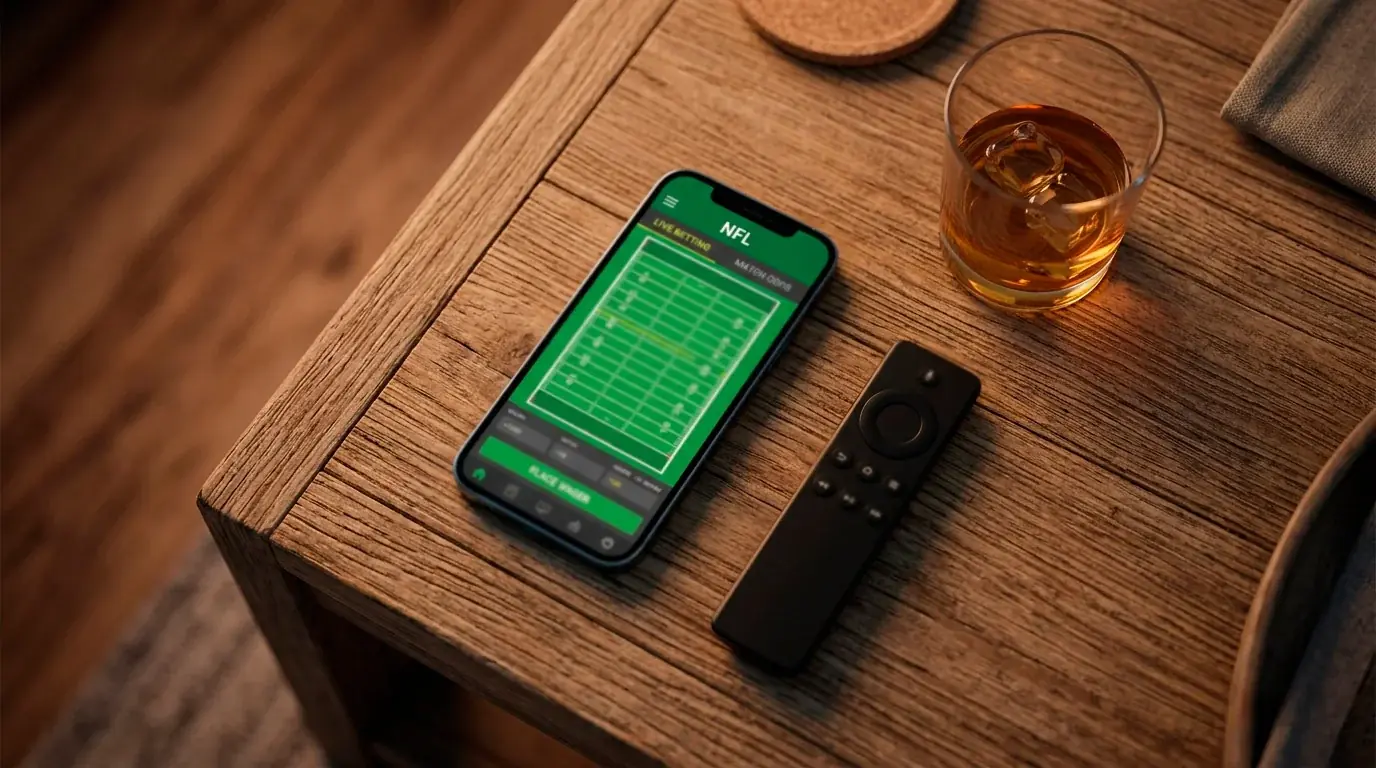
Eight out of ten online bets are placed from a mobile device. For live NFL betting, that ratio is probably higher — you are watching the game on your television or a second screen and placing bets on your phone in response to what you are seeing. The mobile experience at a crypto sportsbook is the live betting experience for the majority of users.
The good news is that most major crypto sportsbooks have invested heavily in mobile responsiveness. Odds update in real time, bet slips are accessible with a tap, and account balances refresh after each settled wager. The browser-based mobile sites at leading platforms are functionally equivalent to dedicated apps, which matters because crypto sportsbooks rarely appear in the Apple App Store or Google Play Store — their offshore licensing status means they do not meet the app store policies of major distribution platforms.
The friction points are crypto-specific. If you need to deposit during a game from your phone, you are navigating between your sportsbook browser tab and your crypto wallet app, copying a deposit address or scanning a QR code, confirming a transaction, and switching back to the sportsbook to wait for the credit. On a desktop with multiple monitors, this is a 30-second process. On a phone, it is a multi-app juggle that eats time and increases the chance of errors — particularly address errors that, with irreversible blockchain transactions, are costly mistakes.
My workflow for mobile live NFL betting is optimised to minimise this friction. I deposit before kick-off, always. I keep the sportsbook open in my mobile browser and the game on television. I do not attempt mid-game deposits. If my balance runs out during a live session, I stop rather than scrambling to fund a top-up under time pressure. The impulse to chase a live line with a rushed deposit is the single biggest practical risk in mobile crypto betting, and the simplest mitigation is refusing to engage with it.
Frequently Asked Questions
Can I place live NFL bets with crypto during UK evening kick-offs?
Yes, provided your funds are already deposited and credited at the sportsbook before kick-off. The standard Sunday slate kicks off at 18:00 GMT with the live betting window extending to roughly 21:00 for the early games. Live bets on custodial crypto sportsbooks execute with the same speed as fiat platforms once your balance is funded — the blockchain is only involved at the deposit and withdrawal stages.
Do blockchain confirmation delays affect live bet placement?
Not if your account is pre-funded. Live bets at custodial crypto sportsbooks are processed on the platform’s internal ledger, not on the blockchain. Blockchain confirmation times only affect deposits and withdrawals. If you attempt to deposit during a live game using on-chain Bitcoin, the 10 to 60 minute confirmation delay will cause you to miss rapidly moving live lines. Use Lightning for near-instant deposits or fund your account before the game starts.
Which crypto is fastest for live in-play NFL betting?
For deposits during a live game, the Lightning Network is the fastest Bitcoin option — near-instant settlement. For stablecoins, USDT on the Tron network (TRC-20) confirms in seconds. On-chain Bitcoin and Ethereum are too slow for mid-game deposits. However, once funds are credited to your sportsbook account, the cryptocurrency used has no effect on live bet execution speed — all bets process at the same speed on the platform’s internal system.
Are live NFL betting markets at crypto sportsbooks as deep as traditional bookmakers?
At major custodial crypto sportsbooks, live market depth is comparable to traditional UK bookmakers for core markets — moneyline, spread, and total. Quarter lines, drive props, and next-score markets are available at leading platforms. Decentralised sportsbooks offer significantly fewer live markets due to on-chain latency constraints. The biggest gap is in market availability for lower-profile games — Week 1 through Week 4, where some teams draw less betting interest.
Learn more about crypto nfl betting on our main page.
You may also find Mobile Crypto NFL Betting: Apps, Wallet Integration, and the UK Experience interesting.
Created by the ”Crypto nfl Betting” editorial team.