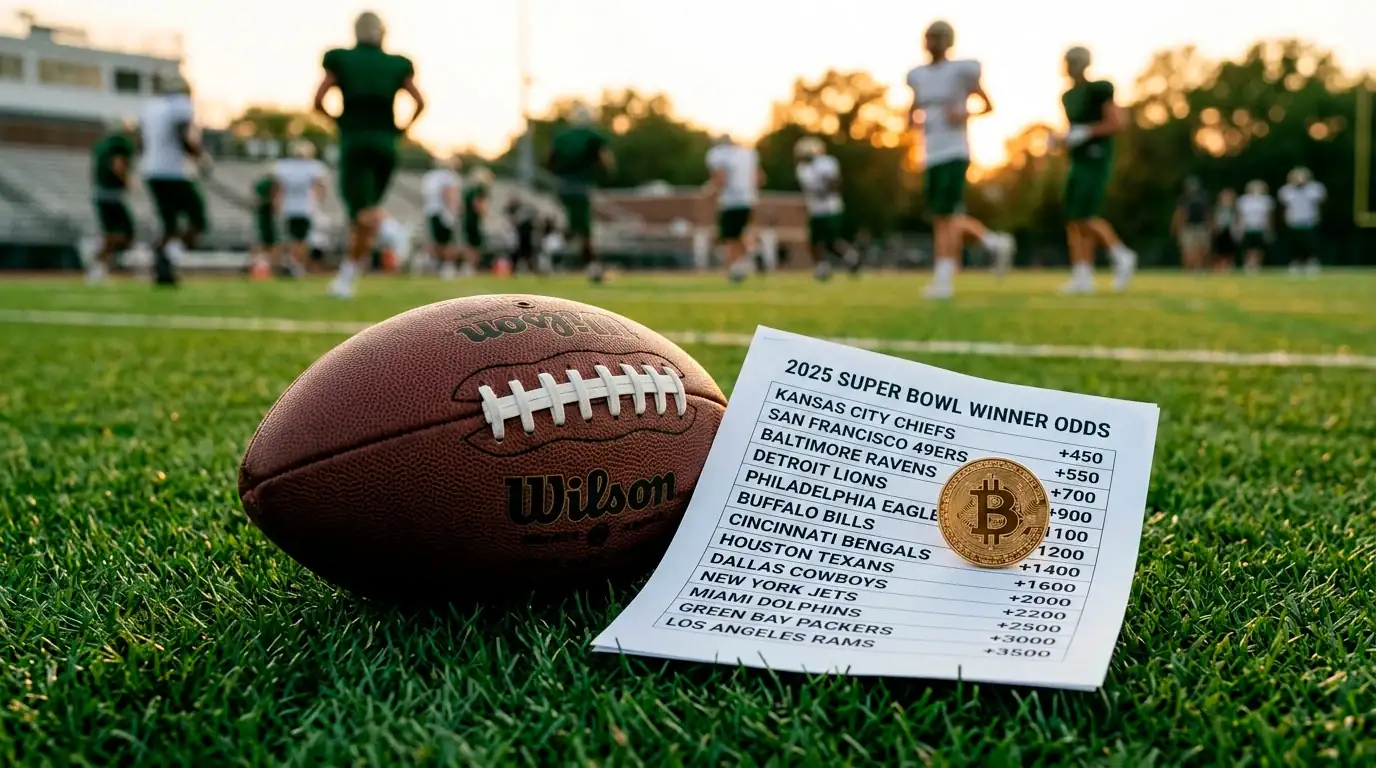
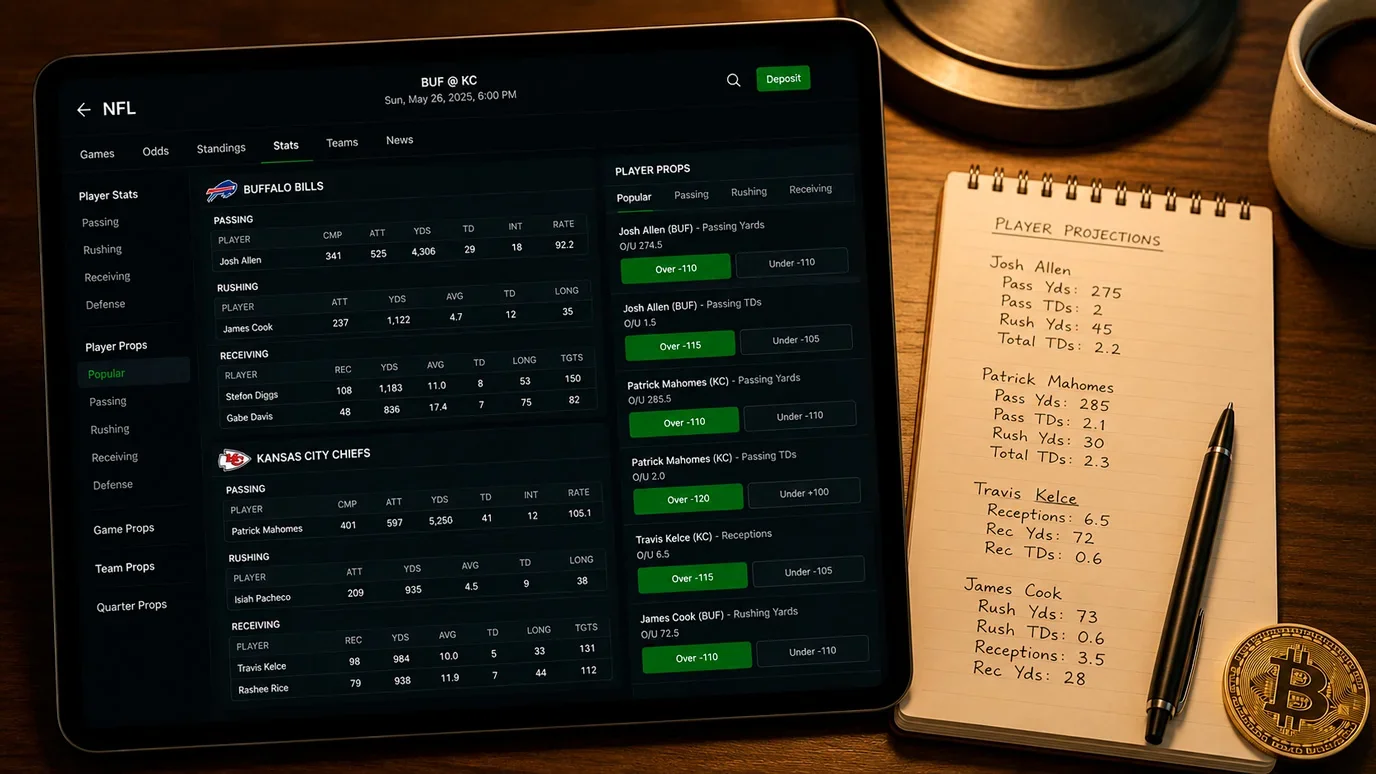
Crypto NFL Betting Risks: Volatility, Scams, and What UK Bettors Must Know
 Available in US
Table of Contents
- Price Volatility: How a Market Swing Can Erase Your Winnings
- Transaction Irreversibility: No Chargebacks, No Refunds
- Offshore Platforms: Licensing Gaps and Enforcement Limits
- Identifying Scam Crypto Sportsbooks: Red Flags
- Problem Gambling and Crypto: Missing Safeguards
- Practical Risk Mitigation for UK Crypto NFL Bettors
- Frequently Asked Questions

I lost money on a winning bet once. Not because my NFL pick was wrong — the Chiefs covered the spread comfortably — but because Bitcoin dropped 11% between the time I deposited and the time I withdrew. My 0.02 BTC profit was worth less in pounds than the 0.018 BTC I had staked. The sportsbook paid me correctly. The blockchain processed flawlessly. And I still walked away with less purchasing power than I started with.
That experience sits at the heart of why I approach crypto NFL betting risks differently from most commentators. The standard warnings — “crypto is volatile, be careful” — are true but unhelpful. UK punters who are already comfortable enough with cryptocurrency to deposit it at a sportsbook do not need to be told that prices fluctuate. They need to understand the specific, concrete mechanisms through which crypto betting can go wrong, and the structural protections that exist (or do not exist) when it does. An estimated 1.5 million people in the UK place roughly 10 billion pounds annually on unlicensed sites, and the gap between what crypto betting promises and what it delivers is where the real risk lives.
Price Volatility: How a Market Swing Can Erase Your Winnings
Let me walk through the maths that most crypto betting guides skip. You deposit 0.05 BTC when Bitcoin is trading at 60,000 pounds. Your deposit is worth 3,000 pounds. You place a spread bet at 10/11 and win, collecting approximately 0.045 BTC in profit. Your sportsbook balance now shows 0.095 BTC. You feel good. Then Bitcoin drops to 52,000 pounds over the next three days while your funds sit in the sportsbook. Your 0.095 BTC is now worth 4,940 pounds — a gain of 1,940 over your initial 3,000 deposit. But if Bitcoin had stayed flat, that same 0.095 BTC would have been worth 5,700. The volatility cost you 760 pounds of theoretical profit.
Now reverse the scenario. Bitcoin rises 15% while your funds are in the sportsbook. Suddenly your winnings are amplified beyond what the odds implied. This is the scenario crypto betting advocates love to cite, but it is a double-edged sword that cuts in both directions with equal force.
The volatility risk compounds with bet duration. A moneyline bet placed and settled within three hours on a Sunday exposes you to a few hours of price movement — manageable. A futures bet placed in August and settled in February exposes you to five months of Bitcoin volatility, during which a 30% to 50% price swing in either direction is not unusual by historical standards. Stablecoins are projected to account for more than 70% of all crypto betting transactions by the end of 2026, and this volatility problem is the primary reason. USDT and USDC hold their dollar peg through market swings, eliminating the currency risk that volatile assets introduce.
The risk is not hypothetical, and it does not require a crash. Even in a sideways market, Bitcoin can swing 5% to 8% in a single week. During the 2025 NFL playoffs, BTC moved by more than 6% on three separate occasions during the four-week window between the Wild Card round and the Super Bowl. If your playoff futures were denominated in BTC, that volatility was silently reshaping your position’s real value with every price tick — completely independent of anything happening on the field.
The practical takeaway is not “avoid Bitcoin” — it is “understand that you are making two bets.” One on the NFL outcome, one on the crypto market. If you want to isolate the football pick from the currency gamble, stablecoins are the tool. If you are comfortable with the dual exposure, at least size your bets with the volatility factored in rather than pretending it does not exist.
Transaction Irreversibility: No Chargebacks, No Refunds
A mate of mine deposited 0.1 BTC at a crypto sportsbook last November, realised within an hour that the platform was not what he expected, and tried to withdraw. The sportsbook required a 1x wagering requirement before withdrawal — meaning he had to bet the full deposit once before they would release it. He placed a single bet, lost, and his withdrawal was now 0.09 BTC. He was annoyed but accepted it. Then the withdrawal took four days. By the time the Bitcoin arrived in his wallet, the price had moved against him and the whole experience cost him roughly 400 pounds. At a UK-licensed bookmaker with a debit card, he could have disputed the charge with his bank.
That recourse does not exist with Bitcoin. Blockchain transactions are final by design. There is no central authority to contact, no chargeback mechanism, no ombudsman. Once you send BTC to a sportsbook’s wallet address, the only way to get it back is for the sportsbook to voluntarily send it to you. Chris Elliot of Wiggin has pointed out that crypto can support a more robust control environment than fiat payments in some respects, but the flip side is that the same immutability that makes blockchain trustworthy also makes it unforgiving.
This irreversibility manifests in three common scenarios for NFL bettors. First, sending funds to the wrong address — a typo in the wallet address means permanent loss. Second, depositing at a platform that subsequently freezes your account, whether for alleged bonus abuse, suspected fraud, or simply because the operator decided to exit the market. Third, a sportsbook error in bet settlement — if a platform settles your NFL bet incorrectly and refuses to correct it, your only recourse is complaining to the licensing jurisdiction, which for most crypto sportsbooks means Curaçao. I would not hold your breath on that process.
Offshore Platforms: Licensing Gaps and Enforcement Limits
Every crypto sportsbook available to UK NFL bettors operates outside UKGC jurisdiction. That is not a minor technical detail — it is the single most important risk factor in the entire crypto betting landscape.
The licensing gap works like this. A UKGC licence imposes specific, enforceable conditions on operators: segregated customer funds, independent dispute resolution, mandatory responsible gambling tools, regular compliance audits, and financial penalties for breaches. A Curaçao licence — the most common among crypto sportsbooks — imposes far less. There are no segregated fund requirements, no standardised complaint procedures for international users, and enforcement actions are rare. The operator holds your funds in a wallet they control, under rules that may or may not protect you, enforced by a regulator thousands of miles away with limited resources and minimal incentive to intervene on behalf of a UK punter.
The scale of the offshore market underscores the risk. Unlicensed gambling operators extracted 379 million pounds from UK consumers in the first half of 2025 alone, and the total unlicensed market has grown by 345% over the period measured by Yield Sec. The UK government’s response — a 26-million-pound Illegal Gambling Taskforce — targets the most egregious operators, but the whack-a-mole nature of offshore enforcement means that shutting down one site often redirects traffic to three others.
For NFL bettors specifically, the offshore risk is amplified by timing. NFL games are played on Sundays, with results settling by late evening UK time. If your crypto sportsbook experiences a technical issue, a liquidity problem, or a sudden policy change during the NFL window, there is no UK regulator to call on Monday morning. Your funds are governed by the laws of whatever Caribbean island issued the licence, and your practical leverage is close to zero.
I have watched three crypto sportsbooks that I had active accounts with go offline permanently since 2020. Two gave no warning — the site simply stopped loading one day. The third posted a notice about “restructuring” and offered partial refunds in crypto that arrived months later at a fraction of the original deposit value. Andrew Rhodes, the Gambling Commission’s CEO, has described the crypto betting question as one that will require a government-level decision because once that door is opened, it cannot be closed. The other side of that coin is that the door to offshore crypto sportsbooks is already wide open, and UK consumers are walking through it with no protection on the other side.
Identifying Scam Crypto Sportsbooks: Red Flags
Not every offshore crypto sportsbook is a scam. But every scam crypto sportsbook is offshore, and the signals that distinguish legitimate operators from fraudulent ones are not always obvious — especially to bettors new to the space.
The first red flag is a newly registered domain with no verifiable operating history. Scam sportsbooks launch, run for three to six months collecting deposits, and then vanish. Check the domain registration date using a WHOIS lookup. If the site has been live for less than a year and has no presence in gambling industry media or forums, proceed with extreme caution. Legitimate operators, even offshore ones, build reputations over years and have documented track records.
The second red flag is aggressive bonus offers with opaque terms. A “500% welcome bonus” sounds remarkable until you read the 60x wagering requirement buried in the terms and conditions. Some scam platforms design bonuses specifically to make withdrawals effectively impossible — you can deposit and bet, but you can never clear the wagering requirements to get your money out. Tim Miller’s observation that “crypto” is one of the top search terms leading UK consumers to unlicensed sites is directly relevant here: these searches often surface the most aggressively marketed platforms, which are frequently the least trustworthy.
The third red flag is withdrawal friction. Legitimate sportsbooks process withdrawals within their stated timeframe consistently. Scam operations invent reasons to delay: additional verification, security holds, technical issues, minimum withdrawal thresholds that were not disclosed at deposit. If a platform takes your deposit in 10 minutes but cannot process your withdrawal in 72 hours, that asymmetry is telling.
Andrew Rhodes of the UK Gambling Commission has been blunt about enforcement: “There will be no warnings.” That stance applies to UKGC-licensed operators, but it also reflects the regulatory mood. The Commission increasingly views unlicensed operators targeting UK consumers as a direct threat, and the Illegal Gambling Taskforce is designed to act on that view. For individual bettors, though, the protection is primarily self-education. No taskforce will recover your Bitcoin from a sportsbook that has already shut down.
Social media is a particularly fertile ground for scam sportsbook promotion. Crypto NFL betting “tips” accounts on X and Telegram frequently promote platforms through affiliate links, earning a commission on deposits that new users may never recover. The promoter has no incentive to verify the platform’s legitimacy — they get paid whether you win, lose, or get scammed. Treat any unsolicited sportsbook recommendation on social media with the same scepticism you would bring to an unsolicited investment tip from a stranger.
Problem Gambling and Crypto: Missing Safeguards
This is the section that matters most and gets discussed least. Crypto betting strips away nearly every responsible gambling safeguard that the UK regulatory framework has spent two decades building.
Start with the numbers: 10% of the UK population actively participates in online sports betting, and 47% engage in some form of gambling. The UK has invested heavily in harm reduction — GamStop self-exclusion, mandatory deposit limits, affordability checks, cooling-off periods, reality checks that interrupt long sessions. These tools exist at every UKGC-licensed operator. At offshore crypto sportsbooks, they are optional at best and absent at worst.
GamStop is the most significant gap. If a UK bettor registers with GamStop, every UKGC-licensed operator is legally required to block their account. Crypto sportsbooks operating from Curaçao, Anjouan, or Costa Rica are not connected to GamStop and have no obligation to check whether a depositing customer has self-excluded. A person who has recognised they have a gambling problem and taken the step of self-excluding can open an account at a crypto sportsbook in five minutes with nothing more than an email address and a Bitcoin wallet. I explore this specific gap in my dedicated piece on GamStop and crypto betting sites.
The speed of crypto transactions amplifies the problem. Fiat deposits involve friction that can serve as a natural brake — bank processing times, debit card limits, e-wallet verification steps. A Bitcoin deposit, particularly via Lightning, is instant. For someone in the grip of a gambling compulsion, the absence of any pause between impulse and action is genuinely dangerous. I say this not as a moralist but as someone who has seen the mechanics up close. The technology is brilliant. The lack of safeguards around it, for this specific use case, is a serious concern.
There is also the compounding effect of anonymity. No-KYC crypto sportsbooks do not verify your identity, which means they cannot cross-reference you against any self-exclusion database, conduct affordability checks, or flag patterns of problematic betting behaviour. The responsible gambling interventions that UKGC-licensed operators are required to implement — automated alerts for customers who increase deposits sharply, mandatory reality checks during long sessions, proactive outreach to at-risk accounts — none of that infrastructure exists at most offshore crypto platforms. The customer is entirely on their own.
Practical Risk Mitigation for UK Crypto NFL Bettors
Nine years in this space have taught me that risk in crypto betting cannot be eliminated — only managed. Here is what actually works, based on mistakes I have made and watched others make.
First, separate your betting bankroll from your investment holdings. Keep your NFL betting funds in a dedicated wallet, ideally denominated in stablecoins, and transfer only what you intend to wager for that week’s slate of games. This limits your exposure if a sportsbook freezes your account or disappears, and it eliminates the temptation to chase losses by dipping into your main crypto portfolio.
Second, never deposit more than you can afford to lose at any single platform. I cap my exposure at any one crypto sportsbook at an amount I would be frustrated but not financially damaged to lose entirely. That figure is different for everyone, but the principle is universal: treat every deposit at an offshore platform as money at partial risk until it is back in your own wallet.
Third, withdraw regularly. Do not let winnings accumulate in a sportsbook account for weeks or months. After each profitable NFL Sunday, withdraw your profits to your personal wallet. The longer your funds sit on a platform you do not control, the more exposure you carry to platform risk, regulatory action, or simple technical failure. I withdraw within 24 hours of every winning session — it is the single most effective risk management habit I have developed.
Fourth, use stablecoins for bets where you want to isolate the NFL outcome from crypto market movements. USDT on the Tron network (TRC-20) offers the fastest and cheapest transaction option for most crypto sportsbooks. Reserve BTC for situations where you are deliberately accepting the dual exposure — or where the sportsbook does not support stablecoin deposits.
Fifth, document everything. Screenshot your deposits, your bets, your withdrawals, and every communication with platform support. If you ever need to dispute a transaction, file a complaint with a licensing authority, or report a tax event to HMRC, the evidence needs to exist outside the sportsbook’s own records, which may be inaccessible if the platform goes offline.
Sixth, set personal limits and enforce them yourself. At a UKGC-licensed bookmaker, deposit limits are mandatory and enforced by the operator. At a crypto sportsbook, you are your own regulator. Decide before the NFL season begins how much you are willing to risk per week and per season, write it down, and stick to it. I use a simple rule: my weekly NFL crypto betting budget is fixed on Monday, and once it is gone, I do not reload until the following week. No exceptions, no “just one more bet.” The absence of external guardrails means internal discipline is not optional — it is the only safeguard that reliably works.
Finally, diversify your platform exposure. Spreading your betting activity across two or three crypto sportsbooks rather than concentrating everything at one platform limits your downside if any single operator fails. It also gives you comparison data on withdrawal speeds, odds quality, and customer service responsiveness — practical intelligence that helps you identify problems early before they become costly.
Frequently Asked Questions
What happens if a crypto sportsbook shuts down with my funds?
Your funds are almost certainly lost. Unlike UKGC-licensed operators, offshore crypto sportsbooks are not required to segregate customer funds from operating capital. If the platform becomes insolvent or simply ceases trading, there is no UK-based compensation scheme and no practical enforcement mechanism to recover deposits held in crypto wallets controlled by the operator. The licensing jurisdiction may offer a complaint process, but recovery rates are extremely low.
Can I get a refund on a Bitcoin bet if the sportsbook made an error?
No mechanism exists for a blockchain-level refund. Bitcoin transactions are irreversible by design. If a sportsbook settles a bet incorrectly, your only option is to contact the platform’s support team and, if they refuse to correct the error, escalate to their licensing authority. For Curaçao-licensed operators, this process is slow and rarely results in resolution favourable to individual bettors.
How do I verify whether an offshore crypto sportsbook is legitimate?
Check the domain registration age via a WHOIS lookup — legitimate operators have years of history. Search for the platform name in gambling industry forums and media for user experiences and complaints. Verify the claimed licence by checking the licensing authority’s public register. Be sceptical of platforms with extremely aggressive bonus offers, minimal company information, or recent domain registrations. No single check is definitive, but the combination paints a reliable picture.
Are there any UK consumer protection schemes for crypto betting losses?
No. UK consumer protection for gambling applies only to UKGC-licensed operators. The Financial Ombudsman Service does not cover gambling disputes, and the Financial Services Compensation Scheme does not apply to crypto sportsbook deposits. The UK government’s Illegal Gambling Taskforce targets unlicensed operators but does not provide individual restitution. If you bet with crypto at an offshore sportsbook, you accept the full risk of loss without UK regulatory recourse.
Find the best options for crypto nfl betting.
Read our detailed review of Crypto NFL Betting Tax in the UK: HMRC Rules on Digital Asset Winnings.
Published by the Crypto nfl Betting team.