NFL Crypto Betting Mistakes: Costly Errors I See Every Season
 Available in US
I lost 0.3 BTC in my first NFL crypto betting season. Not because my game analysis was terrible — my picks actually hit at a reasonable rate — but because every mistake I made happened around the crypto infrastructure, not the football. Wrong network, missed withdrawal windows, chasing with volatile funds after a bad Sunday, ignoring the vig on a parlay that looked attractive but was mathematically abysmal. Those errors cost more than any incorrect pick ever did, and I have spent every season since cataloguing the mistakes I see other bettors repeating.
The American football betting market hit $9.5 billion in 2026, growing at 11.5% annually, and the share of that flowing through cryptocurrency channels keeps climbing. More volume means more newcomers, and newcomers repeat the same errors with remarkable consistency. This piece covers the most expensive ones — not to lecture, but because these are the mistakes I have either made myself or watched close colleagues make in real time.
Sending Crypto to the Wrong Network Address
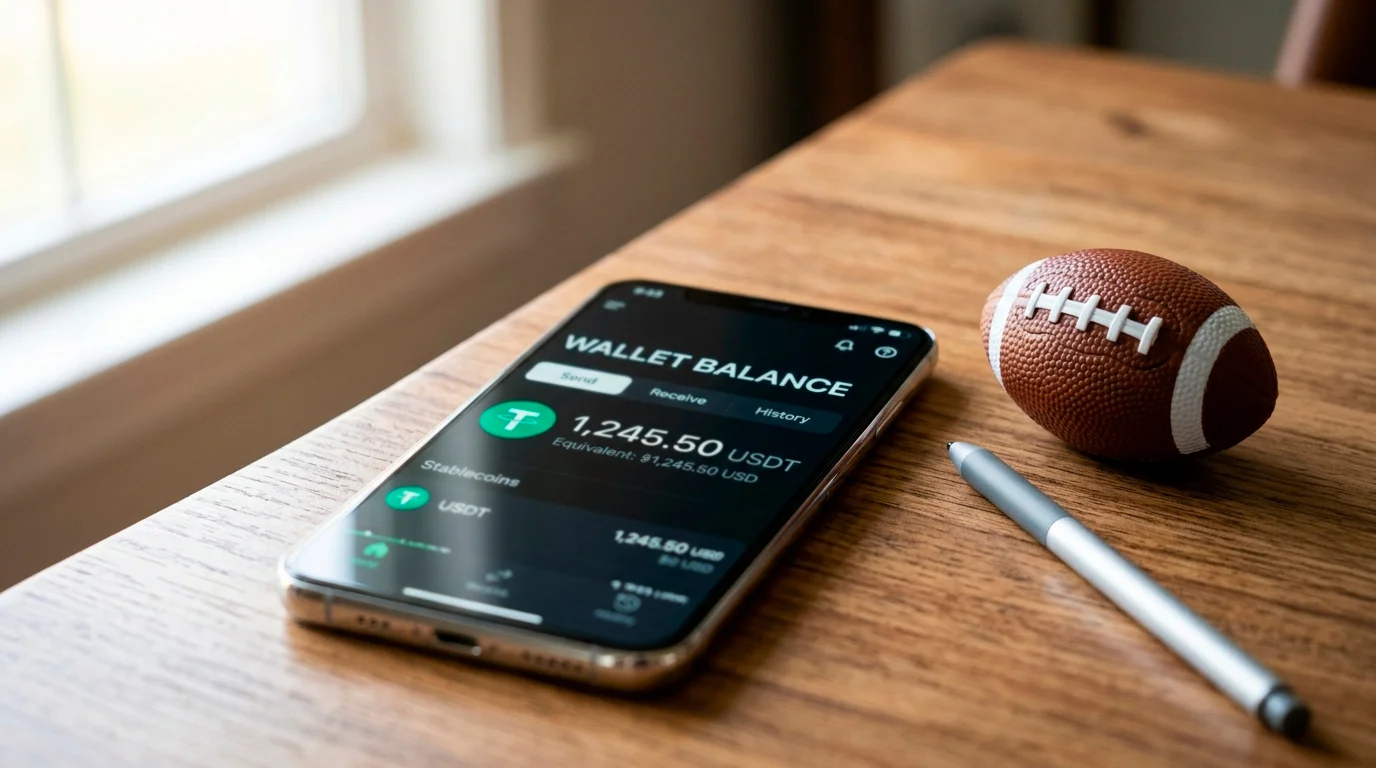
This is the single most devastating error in crypto betting, and it is irreversible. Send USDT on the Ethereum network to a TRC-20 address, and those funds are gone. Not delayed, not recoverable through customer support — gone. I watched a colleague lose $800 this way during a Thursday Night Football rush. He was hurrying to fund his account before kick-off, copied the wrong deposit address from the sportsbook, and confirmed the transaction on his phone without checking the network. The entire balance vanished into an incompatible address.
The safeguard is tediously simple: verify the network before every transaction. If your sportsbook displays a TRC-20 deposit address, confirm that your wallet is set to send on the Tron network. If it shows an ERC-20 address, confirm Ethereum. This takes ten seconds and prevents a catastrophic loss. Yet the mistake persists because sportsbooks display multiple network options on the same deposit page, and under time pressure — a live game, a line about to move — bettors click too fast.
A related error is sending BTC to a BCH address or vice versa. These addresses can look similar depending on the format, and some wallets do not flag the mismatch. The cross-chain mistake is less common than the wrong-network stablecoin error, but it happens often enough that I include it in every beginner briefing I give.
Ignoring Crypto Volatility as a Hidden Cost
Last December, a bettor I advise won a +180 underdog moneyline on a Sunday evening. Brilliant pick. His payout was 0.15 BTC. By Tuesday morning, Bitcoin had dropped 9%, and his profit in pound terms had shrunk from roughly 1,800 to 1,600 before he withdrew. He treated the win as a football success and the currency loss as separate bad luck. But it was not separate at all — it was the same bet, and he had failed to manage the currency dimension.
Stablecoins are projected to account for over 70% of crypto betting transactions by 2026 precisely because serious bettors have figured this out. USDT, USDC, and DAI eliminate the currency variable. Your 500 USDT stake returns a dollar-pegged profit that you can convert to GBP at a predictable exchange rate. Betting with volatile crypto like BTC or ETH introduces a second wager on top of the football wager, and unless that exposure is deliberate, it is a mistake.
The exception is futures bets. If you place a September futures wager in Bitcoin on a team to win the Super Bowl, you are inherently holding BTC for five months. Some bettors embrace this deliberately, treating the combined football + crypto exposure as a high-variance play. That is a coherent position. What is not coherent is ignoring the volatility and then being surprised when a winning bet delivers less value than expected.
Chasing Losses with Impulsive Deposits
Crypto makes depositing dangerously easy. At a traditional bookmaker, reloading after a bad session involves a bank transfer, a card transaction, or a trip to a shop. Each step adds friction. At a crypto sportsbook, refunding takes sixty seconds — open your wallet app, scan a QR code, confirm. I have done it myself on autopilot after a bad first half, and the lack of a cooling-off mechanism is by design. Platforms that accept crypto benefit from frictionless deposits because frictionless deposits drive volume.
The UK’s 15 million NFL fans include a growing segment using crypto for wagering, and the absence of GamStop coverage at offshore sportsbooks means there is no external mechanism to interrupt a chasing spiral. Bankroll management discipline is the only safeguard, and it requires a pre-commitment framework: decide your session bankroll before kick-off, deposit exactly that amount, and accept the outcome without reloading. It sounds straightforward. In practice, after watching your third parlay leg fail with two minutes left in the fourth quarter, the emotional pull toward “one more deposit” is powerful.
One technique that works for me: I transfer my weekly NFL betting allocation to the sportsbook on Tuesday or Wednesday, before any game-week emotion enters the picture. By Sunday, the funds are there, the allocation is fixed, and there is no in-the-moment decision about whether to deposit more. The separation of funding decisions from betting decisions is the single most effective behavioural tool in my arsenal.
Overvaluing Bonuses and Undervaluing Wagering Requirements
Roughly 40% of sportsbook platforms now accept cryptocurrency, and the competition for depositors has created a bonus arms race. The headline numbers look generous: 100% matched deposit, 50 USDT free bet, 10% weekly cashback. The wagering requirements buried in the terms and conditions tell a different story. I have run the expected-value calculations on dozens of crypto sportsbook bonuses, and the majority have an effective value of zero or negative once clearing costs are factored in.
A 100% matched bonus with a 30x wagering requirement on a minimum odds of 1.80 requires you to place thirty times the bonus amount in qualifying bets. On a $500 bonus, that is $15,000 in wagers. At a typical sportsbook margin of 5%, your expected loss across $15,000 in wagers is $750 — more than the bonus itself. You are paying $750 in expected losses to receive $500 in bonus funds. The maths is not subtle once you calculate it, but most bettors never calculate it.
The global crypto gambling market is heading toward $65 billion by 2026, and bonuses are a core driver of that volume growth. The sportsbooks offering the most aggressive bonuses are not being generous — they are running a customer acquisition model that profits from bettors who claim without calculating. If a bonus has wagering requirements below 10x, reasonable odds minimums, no maximum withdrawal cap, and a timeline compatible with the NFL calendar, it deserves consideration. Everything else is marketing.
Neglecting Platform Due Diligence Before Depositing
The mistake I hear about most often, and the one with the highest potential cost, is depositing significant funds at a crypto sportsbook without any prior investigation. The offshore nature of crypto betting means there is no UKGC licence to check, no Financial Ombudsman to complain to, and no regulated dispute resolution process. Your funds are protected only by the operator’s reputation and operational integrity — and those need to be verified before you send a single satoshi.
Due diligence does not require forensic accounting. Check the licensing jurisdiction (Curaçao, MGA, Kahnawake — each carries different implications). Search for the platform name alongside “withdrawal problems” and “scam” in betting forums. Look at how long the sportsbook has been operating — a platform with a five-year track record of processing withdrawals is categorically safer than one that launched last month. Test with a small deposit and withdrawal before committing larger amounts.
The 83.6% increase in crypto betting wagers since mid-2022 has attracted both legitimate operators and opportunists. New crypto sportsbooks appear regularly, many with polished interfaces and generous bonuses that mask thin operational infrastructure. The most expensive mistake in this space is not losing a bet — it is losing access to your balance because the platform holding it was never trustworthy to begin with.
What is the most common crypto NFL betting mistake?
Sending cryptocurrency to the wrong network address is the most devastating single error — it results in permanent, irreversible loss of funds. The most common recurring mistake is ignoring crypto price volatility as a hidden cost, which erodes profitable bets when volatile currencies like Bitcoin decline between deposit and withdrawal. Using stablecoins eliminates this issue.
How can I avoid chasing losses when betting NFL with crypto?
Pre-commit your session bankroll before game day by depositing your weekly allocation on Tuesday or Wednesday, separating the funding decision from the emotional state of active betting. Do not deposit additional funds during or after games. The frictionless nature of crypto deposits makes in-the-moment reloading dangerously easy, so building structural barriers is essential.
Find the best options for crypto nfl betting.
Read our detailed review of NFL Crypto Betting UK Legality: What the Law Actually Says.
Written by the editors at Crypto nfl Betting.