NFL Betting Staking Plans for Crypto: Flat, Percentage, and Confidence-Based Models
 Available in US
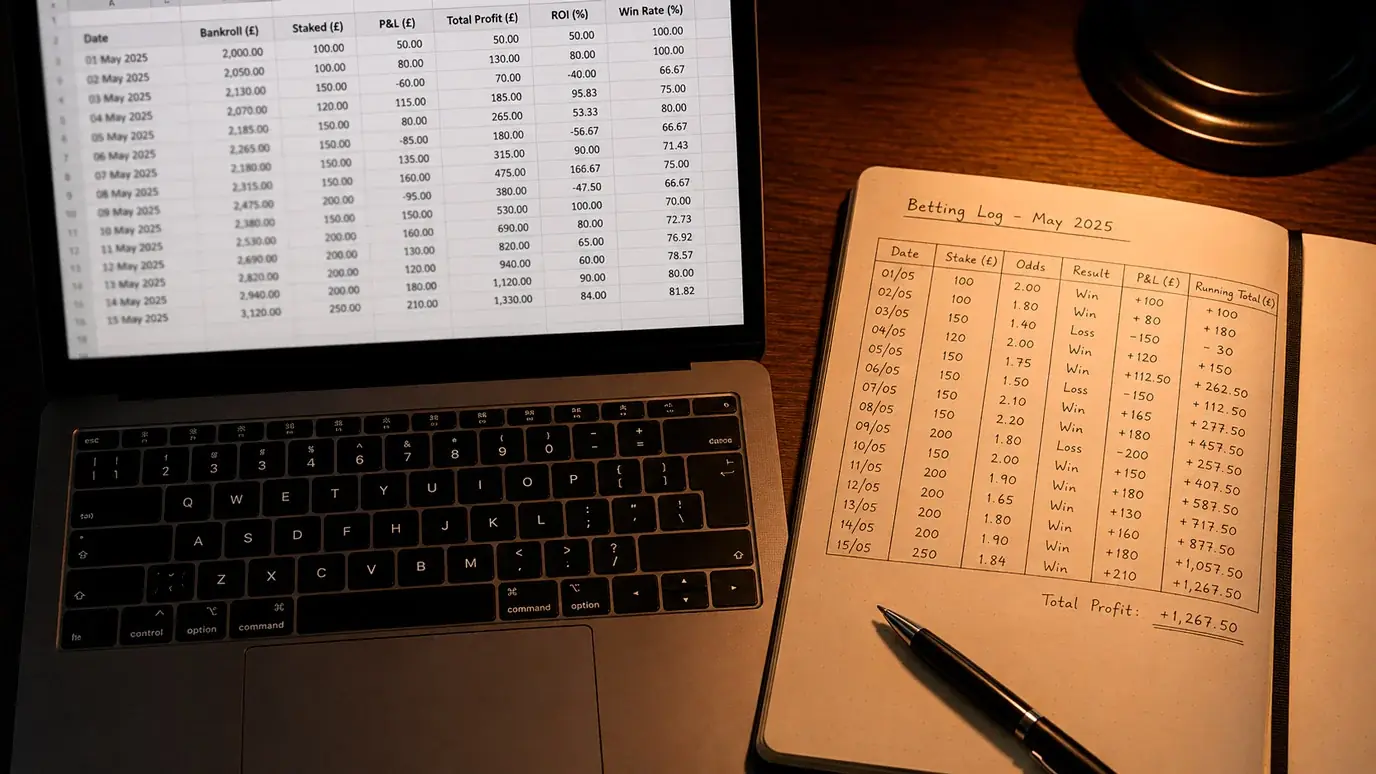
My third NFL season betting with crypto was when I finally abandoned gut-feel staking and built a proper plan. The first two seasons had been profitable on pick rate alone — I was hitting spreads at 54% — but my actual returns were anaemic because I kept sizing bets based on how confident I felt in the moment rather than any systematic framework. One Sunday I staked three units on a pick I described in my notes as “strong lean” and half a unit on a pick I called “lock of the week.” The lock won, the lean lost, and my net result was negative despite going 1-1. That was the week the spreadsheet became non-negotiable.
Staking plans matter more in crypto betting than in traditional fiat wagering for one specific reason: the denominator can shift underneath you. If your bankroll is held in Bitcoin, a 5% drawdown in BTC price reduces your real-terms bankroll even if your betting results are flat. Stablecoins — projected to handle over 70% of all crypto betting transactions by 2026 — eliminate this problem, but plenty of bettors still hold volatile crypto bankrolls and need staking frameworks that account for that additional variable.
Flat Staking: The Simplest Model That Actually Works
I spent two years testing increasingly complex staking models before circling back to the approach I should have started with. Flat staking means every bet gets the same unit size — period. No adjustments for confidence, no scaling based on odds, no Kelly Criterion calculations. One unit on every qualified wager, all season long.
The appeal is discipline. When every bet is the same size, you cannot sabotage yourself by oversizing a “sure thing” that loses or undersizing a contrarian play that hits. The NFL’s competitive balance — engineered through the draft, salary cap, and schedule — means that genuine certainty is rarer than most bettors believe. The $30 billion wagered on the 2025 NFL season was distributed across thousands of games where the margin between outcomes was razor-thin. Flat staking respects that reality by refusing to pretend you can rank your edge with granular precision.
For crypto bankrolls, I define a flat unit as 1-2% of total bankroll value, assessed weekly. If you start the season with a 5,000 USDT bankroll, one unit is 50 to 100 USDT. If your bankroll grows to 6,000 USDT by Week 8, your unit adjusts upward. If it drops to 4,000 USDT, the unit shrinks. This automatic scaling — sometimes called flat-proportional staking — keeps your risk exposure consistent relative to your current capital without requiring any subjective confidence assessment.
The one genuine limitation of flat staking is opportunity cost. If your model identifies a game where you have a 5% edge on the spread versus a game where you have a 1% edge, flat staking treats both identically. You leave theoretical value on the table by not sizing up on the higher-edge play. Whether that theoretical value survives contact with the reality of imperfect edge estimation is the question that separates flat-staking advocates from Kelly advocates — and I have landed firmly in the flat camp after watching too many “high-confidence” plays lose to care about optimising unit sizes.
Percentage-of-Bankroll Staking with Volatile Crypto
If you insist on holding your NFL betting bankroll in Bitcoin or Ethereum rather than stablecoins, percentage-based staking becomes less of a strategy choice and more of a survival mechanism. A fixed-unit approach denominated in BTC — say, 0.01 BTC per bet — maintains its nominal value in Bitcoin terms but fluctuates wildly in real purchasing power. If BTC drops 15% over a three-week stretch, your 0.01 BTC unit buys 15% less than it did when you set the size.
Percentage staking tied to the fiat value of your crypto bankroll addresses this. Instead of “0.01 BTC per bet,” the framework becomes “2% of my bankroll’s current GBP value per bet.” You calculate your bankroll value in pounds at the start of each betting week, apply the percentage, and size your wagers accordingly. If Bitcoin rallied, your unit grows in BTC terms. If it fell, your unit shrinks. The real-terms risk stays constant.
The operational overhead is higher. You need a current BTC-GBP price when setting weekly stakes, and you need to recalculate if you are placing bets across multiple days with significant price movement in between. I automate this with a simple spreadsheet that pulls the exchange rate and outputs my unit size each Tuesday. The whole process takes three minutes, and it prevents the silent bankroll erosion that trips up BTC-denominated bettors who set a unit size in September and do not revisit it until January.
Confidence-Based and Tiered Models
The idea is intuitive: bet more when you are more confident. In practice, the execution requires honest self-assessment that most bettors lack. A three-tier system — one unit on standard plays, two units on strong plays, three units on top plays — only works if your tier assignments correlate with actual edge. If they correlate with emotional conviction instead, tiered staking amplifies losses on the bets you feel strongest about, which tends to be the bets where bias is highest.
I tested a three-tier system across the 2023 and 2024 NFL seasons alongside flat staking on the same set of picks. The results were instructive. In 2023, tiered staking outperformed flat by 4% ROI because my top-tier plays genuinely hit at a higher rate. In 2024, tiered staking underperformed flat by 6% because my confidence calibration was poor — I upgraded too many plays to “strong” based on public narrative rather than model output. Across the two-season sample, the approaches roughly broke even, but the variance on the tiered approach was significantly higher.
If you do use a tiered model with crypto, keep the tiers narrow. A 1x/1.5x/2x structure limits the damage from miscalibrated confidence better than a 1x/2x/3x structure. And never — under any circumstances — create a fourth tier. The “max bet” or “five-unit play” is where bankroll destruction begins. In a league where the risks include both sporting and financial variables, concentrating exposure in single wagers is the fastest path to a blown season.
Adapting Your Plan to the NFL Season Structure
The NFL season is not uniform, and your staking plan should acknowledge its rhythm. The early weeks — Weeks 1 through 4 — carry the highest uncertainty. Roster compositions are still settling, coaching schemes are evolving, and the sample size of current-season data is too small for reliable modelling. I reduce my unit size by 25% during this period, treating the opening month as a calibration phase rather than a full-throttle betting window.
Mid-season — Weeks 5 through 14 — is where the NFL betting market is most efficient and where my staking returns to baseline. The data is robust, the lines are sharp, and edges are smaller but more reliable. Full unit sizing applies here, and the volume of available games (13 to 16 per week) provides enough selection to be disciplined about which matchups qualify for a wager.
The playoffs compress uncertainty into fewer, higher-profile games. Staking during the playoffs requires acknowledging that your per-game exposure is higher simply because there are fewer games to spread risk across. I cap my playoff unit size at 1.5% of bankroll regardless of the regular-season framework, because a single bad Sunday in January can undo weeks of careful regular-season accumulation. The volume of crypto betting spikes during the playoffs — the projected $1.76 billion handle for Super Bowl LX alone illustrates the scale — and that spike brings sharper lines and more public money to fade. The staking plan should reflect the changing landscape, not ignore it.
What staking percentage is recommended for crypto NFL betting?
A flat stake of 1-2% of your total bankroll per wager is the most widely recommended approach. This keeps risk consistent and prevents catastrophic losses from any single bet. Reassess your unit size weekly based on your current bankroll value, particularly if your bankroll is held in volatile cryptocurrency rather than stablecoins.
Should I denominate my crypto betting bankroll in BTC or in fiat value?
Denominating in fiat value (pounds or dollars) provides more stable bankroll management. If you hold your bankroll in Bitcoin, recalculate your unit size weekly based on the current GBP exchange rate. Alternatively, holding your bankroll in stablecoins like USDT eliminates the currency fluctuation entirely, letting you focus staking decisions purely on your betting performance.
Discover everything about crypto nfl betting here.
Check out our guide on NFL Crypto Betting Mistakes: Costly Errors I See Every Season as well.
Published by the Crypto nfl Betting team.