USDT NFL Betting: Why Tether Dominates Crypto Sportsbook Transactions
 Available in US
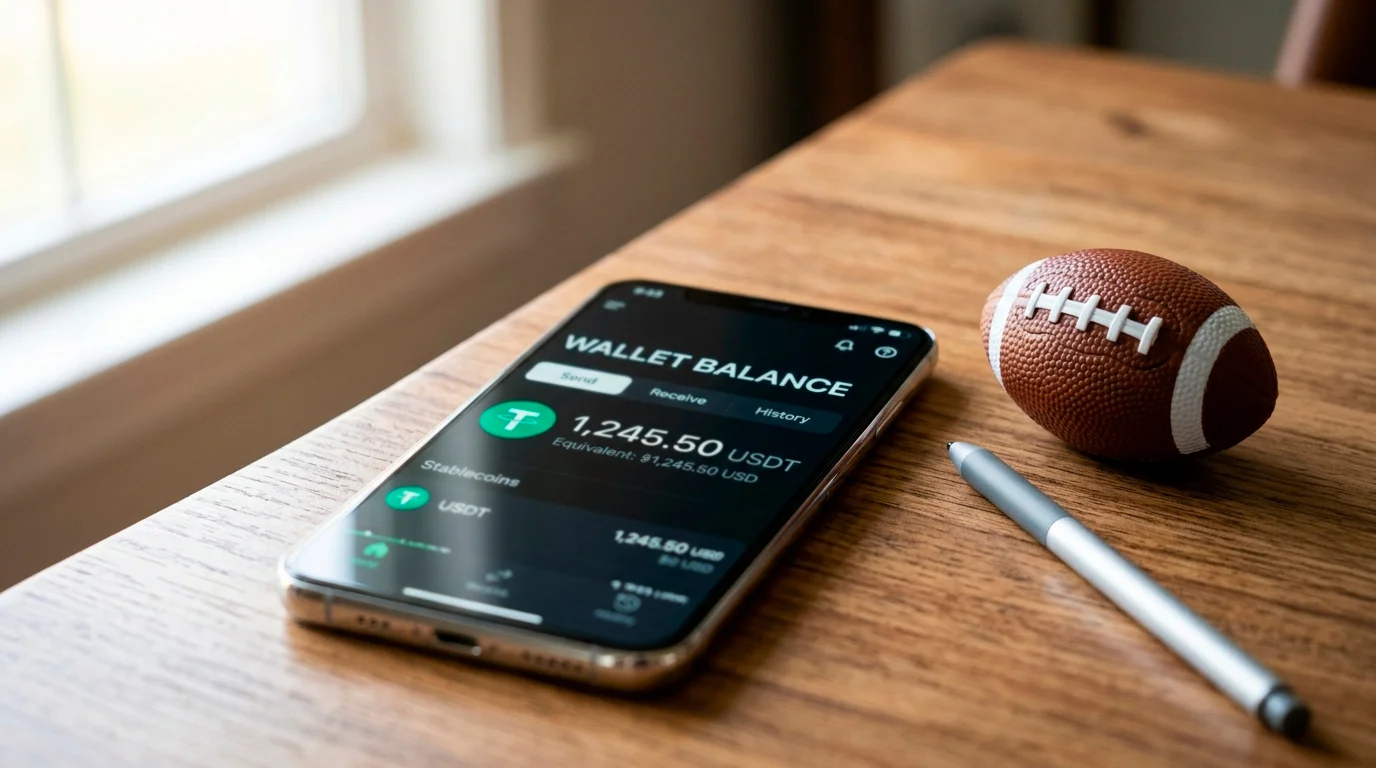
Three years ago, Bitcoin was the default currency at every crypto sportsbook I tracked. Today, stablecoins — and Tether’s USDT in particular — have quietly taken over. The projection that stablecoins will account for more than 70% of all crypto betting transactions by 2026 did not surprise me when I first read it; the shift was already visible in the deposit ledgers and on-chain data I had been watching since 2022. For anyone placing NFL bets with cryptocurrency, USDT has become the path of least resistance, and understanding why tells you a lot about where this market is heading.
USDT’s Share of Crypto Betting Transactions
When I started covering crypto sportsbooks seriously, the conversation was always about Bitcoin. BTC still commands roughly 66% of total crypto gambling volume by some measures, with Ethereum at about 9% and Litecoin at 6%. But those figures are skewed by casino activity — high-frequency slot spins and table game wagers that churn through enormous volumes. In sports betting specifically, and NFL markets in particular, USDT has carved out a dominant position for a simple reason: bettors do not want their bankroll changing value between Monday and Sunday.
Think about it from a practical standpoint. You deposit 0.5 BTC to bet on Week 8 NFL games. Between your deposit on Wednesday and kick-off on Sunday, Bitcoin drops 7%. Your bankroll just lost real purchasing power before you placed a single wager. The reverse can happen too — BTC might rally — but most serious bettors do not want that second layer of speculation. They want to analyse matchups, set their stakes, and let the football outcomes determine their profit or loss. USDT removes the currency variable entirely.
The 70% stablecoin projection reflects this preference crystallising across the market. Sportsbooks have responded by making USDT their primary quoted currency, displaying odds and balances in dollar-pegged terms even when they accept volatile assets. Some platforms now convert Bitcoin deposits to USDT internally upon arrival, though this introduces a conversion spread that bettors should watch for.
TRC-20 vs ERC-20: Which USDT Network for NFL Bets
I learned this lesson the expensive way. My first USDT deposit at a crypto sportsbook went through Ethereum’s ERC-20 network during a period of high gas fees. The transfer cost me roughly $14 in network fees for a $200 deposit — a 7% overhead before I had even looked at a betting line. That experience pushed me toward TRC-20, and the difference was immediate.
TRC-20 — Tether issued on the Tron blockchain — processes transactions in seconds with fees measured in fractions of a penny. For a bettor making weekly NFL deposits of a few hundred pounds, the fee savings over a full season are significant. ERC-20 transactions, by contrast, depend on Ethereum network congestion. During quiet periods fees might drop to $2-3, but during NFT mints or DeFi surges they can spike past $20. That unpredictability is the opposite of what you want from a stablecoin transaction.
The trade-off is ecosystem trust. Ethereum is the more established, more decentralised network. Tron carries concerns around centralisation and its association with certain jurisdictions. For the purpose of sportsbook deposits and withdrawals, though, TRC-20 has won the practical argument. Most crypto sportsbooks default to TRC-20 for USDT transactions, and some do not offer ERC-20 as an option at all.
A third option is gaining traction: USDT on Solana, which combines low fees with fast confirmation times. Adoption among sportsbooks is still limited compared to TRC-20, but I expect this to shift as Solana’s ecosystem matures. The key consideration is always to verify which network your sportsbook supports before initiating a transfer — sending TRC-20 USDT to an ERC-20 address means permanent loss of funds with no recourse.
Stablecoin vs Volatile Crypto: Eliminating Price Risk on NFL Wagers
Here is a scenario I walk bettors through regularly. You place a futures bet on a team to win the Super Bowl in September, staking the equivalent of 500 pounds in Bitcoin. By February, your team wins, and the sportsbook pays out at 8/1. Excellent result — except Bitcoin has dropped 30% over those five months. Your 4,000-pound payout in BTC terms is now worth 2,800 pounds when you convert to sterling. The bet won, but the currency lost.
USDT eliminates this scenario entirely. A 500-USDT stake returns 4,000 USDT at 8/1, and that 4,000 USDT is still worth approximately 4,000 dollars when you cash out. The only slippage is the USDT-to-GBP conversion rate, which moves in a narrow band tied to dollar-sterling forex — nothing like the 30% drawdowns that Bitcoin can produce in a single quarter.
The flip side is opportunity cost. Bitcoin could also rally 30% over that same period, and a USDT bettor misses that upside entirely. I have spoken with punters who deliberately use volatile crypto for long-shot futures, treating the currency appreciation as a second bet layered on top of the sporting outcome. It is a coherent strategy if the volatility exposure is intentional, but most bettors I work with prefer to isolate their edge to the football analysis and let the stablecoin handle the rest.
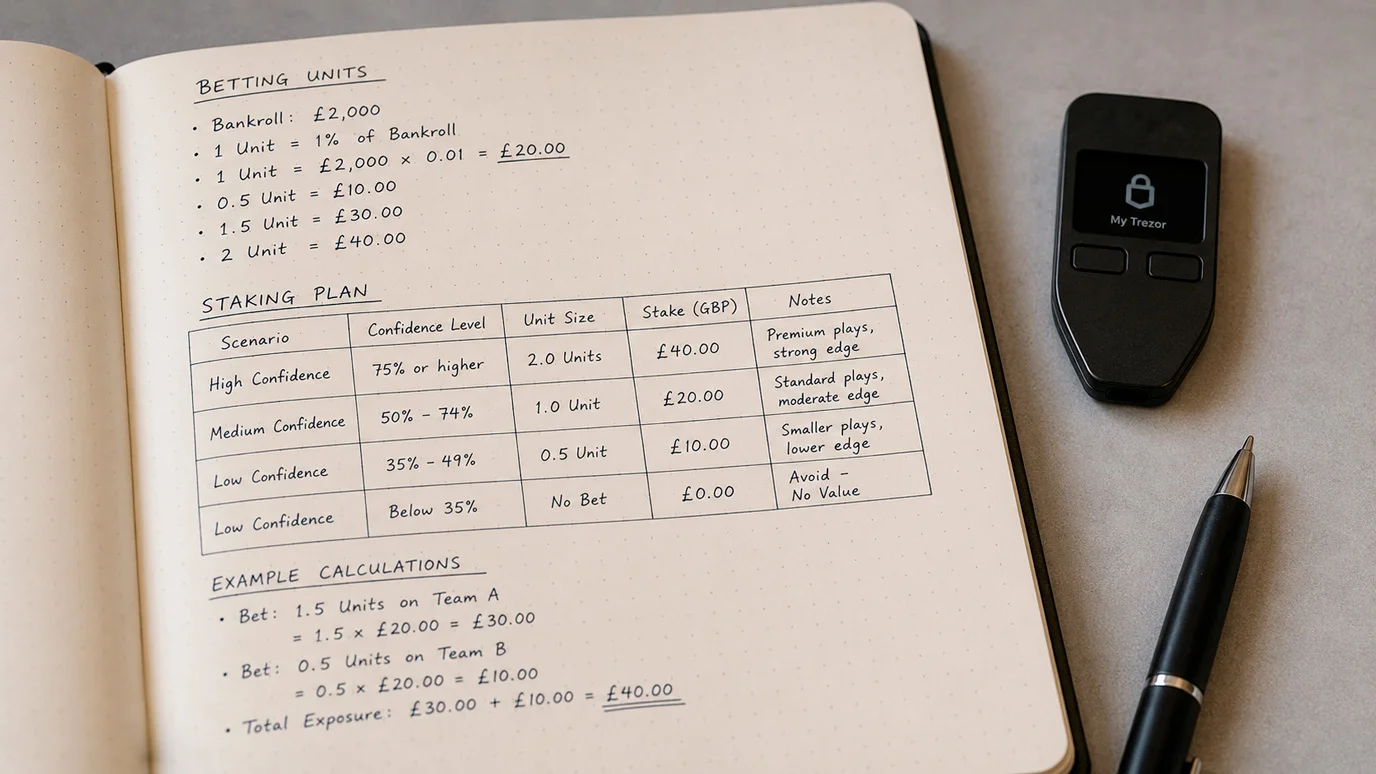
There is also a psychological dimension. Betting with a stable unit of account — where 100 USDT always means roughly 100 dollars — makes bankroll management dramatically easier. Unit sizing, staking plans, and session tracking all become more disciplined when the denominator is not shifting beneath you. For a 17-week NFL regular season plus playoffs, that consistency compounds into clearer decision-making across dozens of wagers.
One final consideration: de-peg risk. USDT briefly traded below $0.98 during the TerraLuna collapse in 2022, and while it recovered quickly, the event demonstrated that “stable” is a relative term. For a bettor holding a few hundred dollars in USDT across a weekend, the risk is negligible. For someone maintaining a four-figure balance across an entire NFL season, it is worth acknowledging that stablecoins carry their own tail risk, even if it is orders of magnitude smaller than holding BTC or ETH.
Does using USDT for NFL betting eliminate crypto volatility risk?
USDT eliminates cryptocurrency price volatility because it is pegged to the US dollar. Your bankroll maintains a stable dollar value regardless of Bitcoin or Ethereum market movements. The only currency fluctuation is the USD-GBP exchange rate, which moves in a much narrower range. However, stablecoins carry a small de-peg risk, as demonstrated during the TerraLuna event in 2022.
Which USDT network has the fastest deposits at crypto sportsbooks?
TRC-20 on the Tron network offers the fastest confirmation times for USDT deposits, typically settling in seconds with negligible fees. ERC-20 on Ethereum is slower and subject to variable gas fees. Solana-based USDT is fast and cheap but has limited sportsbook adoption. Always verify which network your sportsbook supports before sending funds.
Can I convert USDT winnings to GBP directly?
Not directly. You would withdraw USDT from the sportsbook to a crypto exchange that supports GBP trading pairs, sell the USDT for GBP, and then transfer the fiat to your UK bank account. The process typically takes one to three business days depending on the exchange and your bank.
Find the best options for crypto nfl betting.
Read our detailed review of VPN and Crypto NFL Betting: Access, Risks, and What UK Bettors Face.
Published by the Crypto nfl Betting team.