Provably Fair NFL Betting: How On-Chain Verification Works
 Available in US
The phrase “provably fair” gets thrown around crypto gambling spaces like a magic seal of legitimacy. I have watched it evolve from a niche technical feature at early Bitcoin casinos into a marketing buzzword slapped onto platforms that barely implement the concept. For NFL betting specifically, the picture is more complex than the tagline suggests — and understanding where provably fair verification actually works, and where it does not, matters if you are trusting your bankroll to these systems.
Crypto betting wagers have increased by 83.6% since mid-2022, and a growing portion of that volume flows through platforms marketing themselves as transparent or provably fair. The gap between the claim and the reality deserves scrutiny.
How Provably Fair Systems Work in Sports Betting
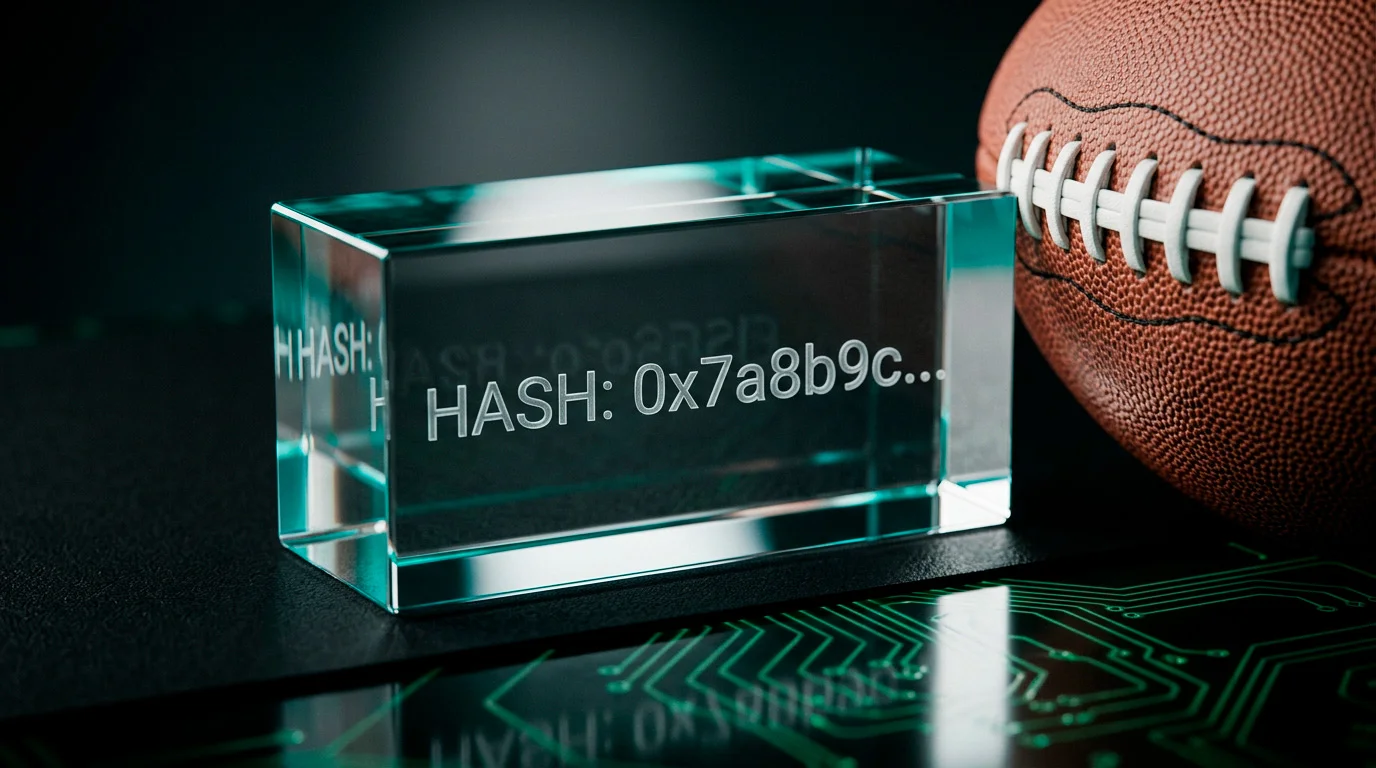
The original provably fair model was built for casino games — dice rolls, coin flips, simple outcomes generated by algorithms. The system uses cryptographic hashing to let players verify that the outcome of a game was determined before the bet was placed. Here is the short version: the platform generates a secret seed, hashes it, shares the hash with you before the game, and reveals the seed after the outcome. You can then hash the revealed seed yourself and confirm it matches. If it matches, the outcome was predetermined and not tampered with after you placed your wager.
This works beautifully for a dice game. The platform controls the random number generation, and the cryptographic proof confirms that control was exercised honestly. But NFL betting is fundamentally different. The platform does not control the outcome. Whether the Kansas City Chiefs cover a 3.5-point spread is determined by real-world events involving 22 players on a field in Missouri, not by a server-side random number generator.
So what does “provably fair” mean in the context of sports betting? At its most rigorous, it means the odds offered and the bet terms are committed to the blockchain before kick-off, preventing the sportsbook from retroactively altering lines, voiding wagers, or changing payout terms after the game result is known. Smart contracts handle this by locking the bettor’s stake and the sportsbook’s liability at the time the wager is accepted, with settlement triggered by an external data feed — an oracle — that reports the game result.
The cryptographic guarantee is narrower than in casino applications: it verifies that the sportsbook did not change the terms, but it does not verify the game itself. The football is still played by humans, officiated by humans, and the result is still reported through off-chain channels before it reaches the blockchain.
On-Chain vs Off-Chain Odds: What Is Actually Verified
This distinction is where most marketing materials get deliberately vague, and where I spend a lot of time setting expectations with bettors. Crypto casinos now account for approximately 17% of all iGaming volume globally, and the platforms within that space operate on a spectrum from fully on-chain to barely on-chain.
A fully on-chain sports bet works like this: you interact with a decentralised sportsbook’s smart contract, committing your stake and the terms of the wager (team, line, odds) to the blockchain. The smart contract holds both your funds and the sportsbook’s matching liability in escrow. When the game concludes, an oracle service — typically Chainlink or a similar decentralised oracle network — feeds the result to the smart contract, which automatically settles and distributes funds. Every step is auditable on the blockchain.
Most “provably fair” crypto sportsbooks do not operate this way. The more common model is off-chain odds with on-chain settlement. The sportsbook sets the odds on its own servers, accepts your bet through a conventional interface, and only commits the final settlement to the blockchain. This gives you a verifiable record that you were paid (or not paid) for a specific bet, but it does not let you verify that the odds were set fairly or that the line you saw was the line that was recorded.
An even lighter implementation uses blockchain only for deposits and withdrawals, with the entire betting engine running on centralised servers. These platforms sometimes call themselves “crypto-native” or “blockchain-powered” without meeting any meaningful standard of on-chain verification. The bet itself — the terms, the odds, the outcome — is entirely in the sportsbook’s hands, just like a traditional bookie. The only blockchain element is the payment rail.
Knowing which model your sportsbook uses is not academic. If the odds and bet terms live off-chain, the sportsbook can still void your bet, change the line retroactively, or grade a wager incorrectly. The blockchain receipt of your deposit does not protect you from those scenarios.
Limitations of Provably Fair for NFL Wagering
Even the most rigorous on-chain model has limitations specific to sports betting. The oracle problem is the big one. A smart contract can only settle based on the data it receives from the oracle, and oracles are not infallible. I have seen delayed oracle feeds that caused incorrect early settlements on live bets, and edge cases around game suspensions or stat corrections that the oracle did not handle cleanly.
NFL-specific complications include stat corrections — the league sometimes revises official statistics after the game, which can affect prop bet outcomes — and rule interpretations around game delays, overtime, or incomplete games. A provably fair smart contract settles mechanically based on its oracle feed, which means it lacks the discretion that a human settlements team at a traditional sportsbook would exercise. That mechanical quality is a feature in straightforward cases and a bug in edge cases.
Liquidity is another constraint. Fully on-chain sportsbooks require capital locked in smart contracts to back the other side of your bet. For high-profile NFL games with deep prop markets, the capital requirements are substantial. Most decentralised platforms handle this through liquidity pools where users provide capital in exchange for a share of the sportsbook’s edge — a model that works when the platform prices risk accurately but can create solvency problems during heavy one-sided action.
The honest assessment is this: provably fair technology adds a layer of transparency to crypto sports betting, but it is not a substitute for due diligence on the platform itself. A sportsbook with a clean on-chain settlement record, consistent oracle integration, and adequate liquidity is a meaningful improvement over a centralised offshore book with no verifiable track record. A sportsbook that slaps “provably fair” on its marketing while running an opaque off-chain engine is worse than useless — it is misleading.
Does provably fair apply to NFL sports betting or only casino games?
Provably fair verification originated in casino games where the platform controls outcomes through random number generation. For NFL betting, the concept applies differently — it can verify that bet terms and odds were committed before kick-off and that settlement followed the oracle-reported result, but it cannot verify the real-world game outcome itself. The level of on-chain verification varies significantly between platforms.
How can I verify that a crypto sportsbook’s NFL odds are transparent?
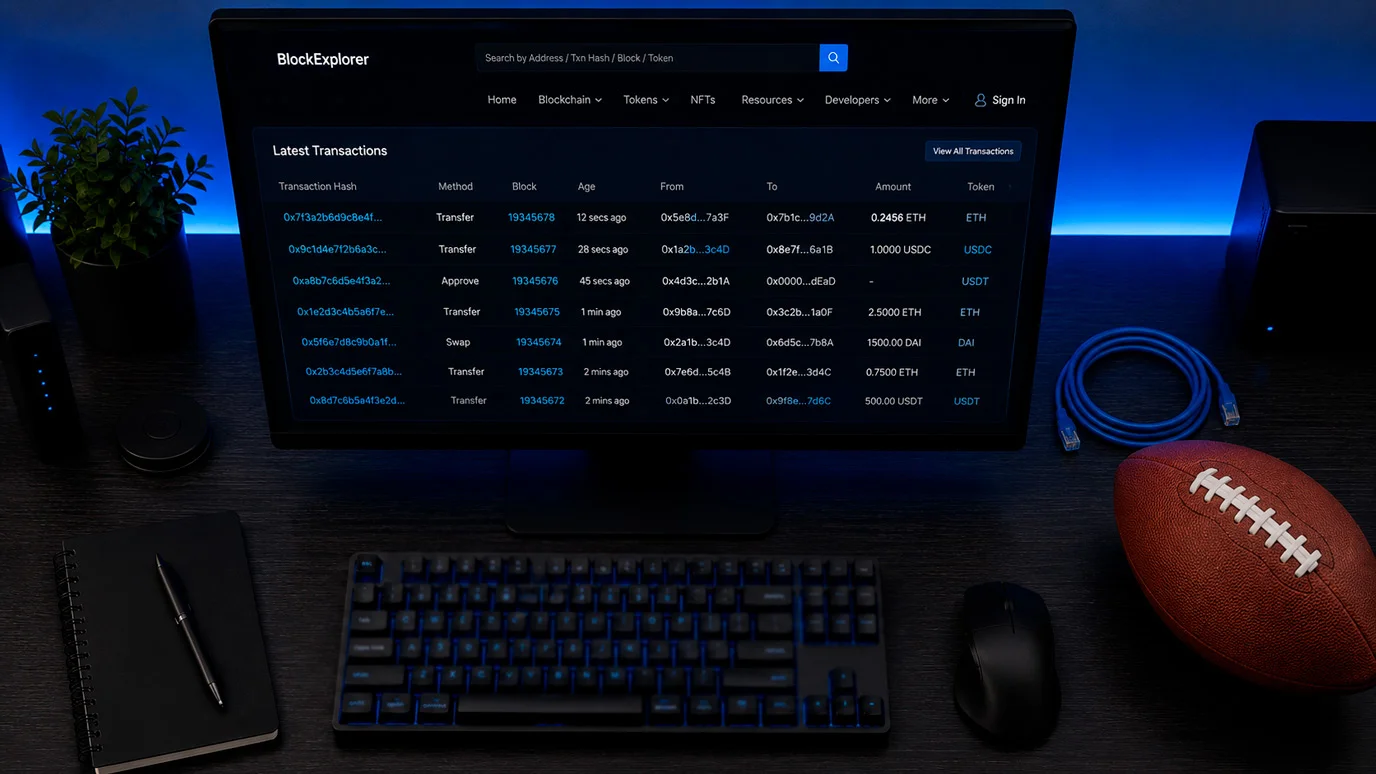
Check whether the sportsbook publishes smart contract addresses you can audit on a block explorer. Fully on-chain sportsbooks commit bet terms to the blockchain before the game, and you can verify the settlement transaction against the oracle feed. If the sportsbook only uses blockchain for deposits and withdrawals while running odds on centralised servers, the verification is limited to payment records, not bet fairness.
Learn more about crypto nfl betting on our main page.
You may also find UK Gambling Commission and Crypto Betting: Where Regulation Stands in 2026 interesting.
Written by the editors at Crypto nfl Betting.