Crypto NFL Betting Tax in the UK: HMRC Rules on Digital Asset Winnings
 Available in US
The question lands in my inbox at least twice a week during NFL season: “I won Bitcoin betting on the NFL — do I owe tax?” The short answer sounds simple. The full answer is anything but. UK tax treatment of crypto betting winnings sits at the intersection of two sets of rules — gambling tax and cryptoasset tax — and how they interact depends on the specific sequence of transactions you make. Get it wrong and HMRC has the tools to notice, particularly as 8% of UK adults now hold crypto and the tax authority has invested heavily in blockchain analytics.
Gambling Winnings in the UK: The Tax-Free Principle
The UK’s position on gambling winnings is unusually generous by global standards. Since 2001, when Gordon Brown’s government abolished betting duty for punters and shifted the tax burden to operators, gambling winnings have been tax-free for individual bettors. It does not matter whether you win ten pounds on a Grand National accumulator or ten thousand on an NFL point spread — HMRC does not tax the winnings themselves.
This principle applies regardless of the payment method. A win settled in Bitcoin at an offshore crypto sportsbook receives the same tax-free treatment as a win paid in sterling at a UKGC-licensed bookmaker. The source of the winnings is irrelevant; what matters is that the activity constitutes gambling rather than trading or professional activity.
The UK generates 16.8 billion pounds in gross gambling yield from remote betting annually, and the tax-free status for punters is a deliberate policy choice that keeps the regulatory burden on the supply side. Operators pay a 21% Remote Gaming Duty on their profits from UK customers; the individual bettor pays nothing on their wins. This framework has remained stable through multiple governments and shows no sign of changing.
There is an important caveat, though. If HMRC determines that your gambling activity constitutes a trade — systematic, organised, with profit as the primary motive and sustained frequency — the tax-free exemption can be challenged. For the vast majority of recreational NFL bettors, this threshold is not relevant. But if you are placing hundreds of wagers per week using algorithmic models and treating your sportsbook balance as a business operation, the line between “gambling” and “trading” becomes worth understanding clearly.
Capital Gains Tax on Crypto-to-Fiat Conversions
Here is where the simplicity ends and the complexity begins. Your NFL betting winnings are tax-free. But the moment you convert those winnings from cryptocurrency to pounds sterling, you trigger a potential capital gains tax event — not on the gambling profit, but on any appreciation in the value of the crypto between when you received it and when you sold it.
An example makes this concrete. You deposit 0.5 BTC at a sportsbook when Bitcoin trades at 30,000 pounds. You win a bet and withdraw 0.8 BTC. At the point of withdrawal, BTC is still 30,000 pounds — your gambling winnings are 9,000 pounds (0.3 BTC x 30,000), and those are tax-free. But you hold the 0.8 BTC for two months before converting to sterling, and by then BTC has risen to 35,000 pounds. The 5,000-pound-per-Bitcoin appreciation on your 0.8 BTC holding creates a 4,000-pound capital gain that falls within HMRC’s CGT rules.
The annual CGT allowance for individuals was reduced to 3,000 pounds in the 2024/25 tax year, which means even modest crypto price movements can push a bettor above the threshold. The rate is 10% for basic-rate taxpayers and 20% for higher-rate taxpayers on gains above the allowance. Gambling Commission CEO Andrew Rhodes has described crypto as requiring “government-level discussion” precisely because it introduces these layered financial complexities that traditional betting does not.
HMRC’s position is clear: every disposal of a cryptoasset — selling for fiat, exchanging for another crypto, or using it to pay for goods — is a taxable event for CGT purposes. The acquisition cost of your crypto winnings is the market value at the time you received them from the sportsbook. The gain (or loss) is the difference between that acquisition cost and the disposal value. Keeping accurate records of transaction times and values is not optional; it is the only way to calculate your liability correctly.
The roughly 4.5 million crypto holders in the UK have an average holding of approximately 1,842 pounds, and many of them do not maintain the transaction records HMRC requires. For bettors moving crypto between wallets, sportsbooks, and exchanges, the record-keeping burden is higher than for a buy-and-hold investor. Every deposit, every withdrawal, every conversion needs a timestamp and a market value.
HMRC Reporting Requirements for Crypto Transactions
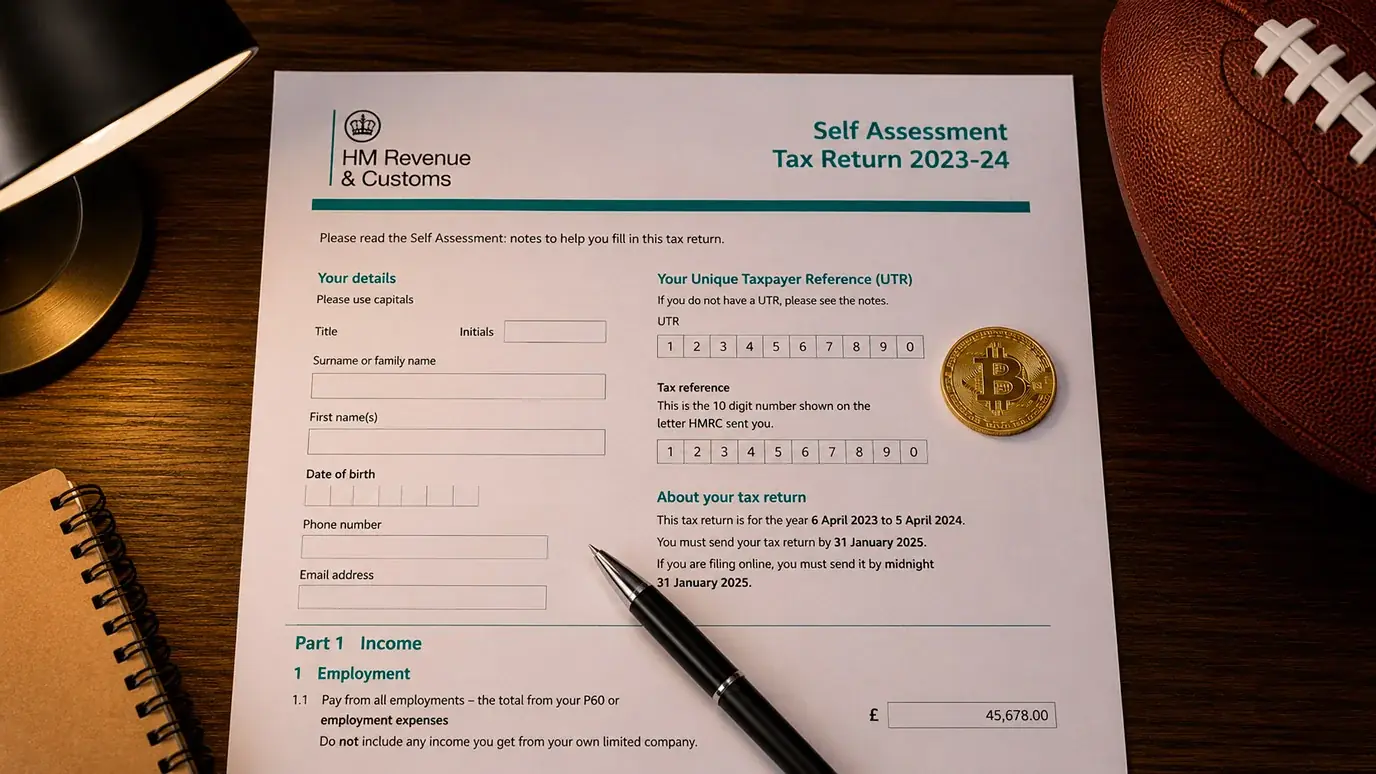
HMRC requires self-assessment reporting for any capital gains above the annual allowance. If your crypto-to-fiat conversions — from converting NFL betting winnings to GBP or any other crypto activity — generate gains exceeding 3,000 pounds in a tax year, you must report them on your tax return.
The reporting applies to all crypto disposals, not just those linked to gambling. If you also trade crypto, hold it as an investment, or use it for purchases, those gains aggregate with your betting-related conversions. HMRC does not separate “gambling crypto” from “investment crypto” for CGT purposes — it all sits in the same capital gains calculation.
Blockchain analytics capabilities at HMRC have expanded considerably. The tax authority has data-sharing agreements with major UK-registered crypto exchanges, and it has issued “nudge letters” to individuals it suspects of underreporting crypto gains. The pseudonymous nature of cryptocurrency does not provide the protection some bettors assume — particularly when crypto moves through KYC-compliant exchanges at any point in its lifecycle.
Record-keeping best practice: maintain a spreadsheet or use crypto tax software that logs every sportsbook deposit (date, amount, BTC/GBP value), every withdrawal (same details), and every fiat conversion. The acquisition cost of winnings is the market price at the time the sportsbook credited your account, not the price when you deposited. This distinction matters and is easy to get wrong.
One final point worth stressing: this article is informational, not tax advice. Individual circumstances vary, and the interaction between gambling winnings, CGT, and HMRC reporting obligations can become complex when multiple transactions overlap within a tax year. A qualified tax adviser familiar with both crypto and gambling taxation is worth the consultation fee, particularly if your annual betting volume is significant.
Are my crypto NFL betting winnings tax-free in the UK?
Yes, gambling winnings themselves are tax-free for UK residents regardless of the payment method. This applies to crypto sportsbook winnings just as it does to traditional bookmaker payouts. However, any appreciation in the value of the cryptocurrency between receiving your winnings and converting to GBP may trigger a separate capital gains tax liability.
Do I owe capital gains tax when converting Bitcoin winnings to GBP?
Potentially. If the Bitcoin appreciated in value between when you received it as winnings and when you sold it for sterling, the gain is subject to capital gains tax above the annual allowance of 3,000 pounds. The tax applies to the crypto appreciation, not the gambling profit itself. Accurate record-keeping of transaction dates and values is essential for calculating any liability.
Learn more about crypto nfl betting on our main page.
You may also find Crypto Sportsbook Odds Comparison: How NFL Lines Differ Across Platforms interesting.
Prepared by the Crypto nfl Betting editorial staff.